

Ilaria Nigro
“In the labyrinth of the mind, neurodegenerative disease research illuminates unknown paths, offering hope to those fighting for each and every memory.”
Contact: Ilaria.nigro@unibas.it
My Ph.D. project aims to evaluate the putative activity of the liver-derived URG7 (Up regulated Gene Clone 7) protein in a completely different context, namely in parkinsonian neuronal models, both cellular and animal. The activity of URG7 is related to the attenuation of endoplasmic reticulum stress resulting from HBV infection, promoting protein degradation processes to reestablish physiological proteostasis, and thus, overall limiting cell apoptosis. If such properties in the context of HBV infection have negative implications overall, the same could be 'exploited' positively in the context of proteinopathies in neuronal systems, including neurodegenerative diseases and thus Parkinson's disease, which is characterized, at the cellular and molecular level, precisely by protein misfolding, mitochondrial dysfunction, oxidative stress, and calcium homeostasis imbalance, all processes that ultimately promote cell death by apoptosis.
Making use of different neurotoxins (particularly 6-OHDA and Tunicamycin), in vitro models mimicking these peculiar processes were made in order to evaluate the activity of URG7 potein. The main cell biology techniques were used for this purpose, namely: cell infection using a lentiviral vector containing the URG7 protein gene so as to over express the protein in cellular systems, immunofluorescence and confocal microscopy assays, Real-time PCR, Western blotting, cell viability assays, DCFH-DA assay for measuring ROS levels, measurement of mitochondrial membrane potential through the use of cytofluorometer, measurement of calcium in the endoplasmic reticulum using steady-state FRET experiments but also measurement of cytosolic calcium, measurement of enzyme activities through colorimetric assays, PLA assay to assess possible interactions between cellular proteins and apoptotic assays.
This project, therefore, aims to lay the groundwork for the identification of an innovative therapeutic approach that aims to counteract the various molecular and cellular processes that contribute to the progression of Parkinson's disease, as currently therapy involves only the use of drugs for symptomatic treatment.
How my position is funded
My doctoral fellowship titled “Molecular Mechanisms of Cellular Response to Stress Damage in Aging-Related Diseases” was funded by Poli-San srl, Clinical Analysis Laboratory and Polyclinic of Potenza.
My motivations
The desire to participate in this PhD course has a twofold motivation: the great fascination exerted by the topic, fueled and confirmed by the studies conducted during the pursuit of my undergraduate degree, and the interest triggered by the experience gained in the laboratory during the research conducted for the preparation of my thesis. Therefore, my goal would be to put the accumulated theoretical and practical experience to good use, seeking to make a direct contribution to research in the field of neurodegenerative diseases. What particularly attracts me is the design of preventive and therapeutic strategies in the context of Parkinson's disease. Currently, unfortunately, no treatment is available to modify the clinical course of Parkinson's disease; drug therapy involves only the use of drugs for symptomatic treatment. This disease, therefore, is attracting increasing interest in the scientific community, which is working with great activism to design new therapeutic approaches. For these reasons, I have found it valuable to explore this approach in depth, seeking to contribute to the expansion of scientific knowledge in a fundamentally important field. Upon completion of my doctoral program, I would like to continue in academia by continuing to work on this project, but I would also like to pursue new avenues of research to expand my knowledge.
A day in a PhD student’s life
A PhD student's typical day can vary greatly depending on the field of study, stage of the doctoral program, and specific research responsibilities. However, there are some common activities that many doctoral students may face on a daily basis. Here is a rough description of how a typical day of mine might unfold: My day often starts relatively early with a review of planned activities, goals to be achieved, and any communications from my reviewer. Once planned, I get down to the practical part: lab work, data collection and analysis of the data obtained. An important part of the day is devoted to reading academic papers, writing part of articles for publication and possible revisions of submitted papers. As far as the teaching part is concerned, very often we doctoral students are required to take courses, issued by our university to enrich our cultural background, and these courses take place mainly in the late morning through lectures in telematics mode. After a short break, we resume with lab activities or even tutoring and teaching support activities from my supervisor. The day ends with a discussion with my supervisor to discuss achievements, receive feedback and plan next steps.
My events
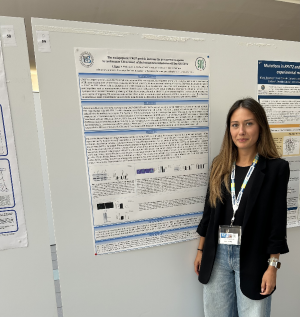
During my PhD program, I actively participated in several conferences by presenting abstracts and posters. I give you a little list about my contributions in conference abstracts and poster:
• I. Nigro, R. Miglionico, L. Pagano, F. Bisaccia, M.F. Armentano. Neuroprotective effect of URG7 protein against stress caused by the neurotoxin 6¬-OHDA in SH¬-SY5Y cells. FEBS Open Bio 14 (Suppl. 2) (2024) 94–516 DOI: 10.1002/2211-5463.13837
• R. Miglionico, F. Crispo, I. Nigro, M. Monné, G. Santoro, N. Cascelli, M. Martinelli, L. Chiummiento, M. Funicello, F. Bisaccia, M.F. Armentano. Repositioning a novel precursor of the HIV-1 protease inhibitor darunavir: antiproliferative effect, autophagy activation and proteasomeinhibition by RDD-142 in hepatocarcinoma cell line HepG2. FEBS Open Bio 14 (Suppl. 2) (2024) 3–91 DOI: 10.1002/2211-5463.13836
• I. Nigro, R. Miglionico, A.Gerbino, M. Carmosino, F. Bisaccia, M.F. Armentano. The antiapoptotic URG7 protein increase the prosurvival response to tunicamicin ER stressed of the human neuroblastoma cell line SH-SY5Y. SIB 2023 Congress, Firenze 7-9/09/2023
• I. Nigro, R. Miglionico, F. Bisaccia, M.F. Armentano. URG7 protects injury caused by neurotoxins in SH-Y5Y cells. FEBS Open Bio13 (Suppl. S2) (2023) 61–258 DOI: 10.1002/2211-5463.13646
• I .Nigro, R. Miglionico, R. Rinaldi, M. Carmisino, A. Gerbino, F. Bisaccia, M.F. Armentano. URG7 and ER stress in neurodegeneration: a lucky intuition or a flash pan? FEBS Open Bio12(Suppl. S1) (2022) 67–336 DOI: 10.1002/2211-5463.13440
• R. Miglionico, I.Nigro, R. Rinaldi, C. Caddeo, M. Funicello, P. Lupattelli, L. Chiummiento, A. Vassallo, F. Bisaccia ,M.F. Armentano. ANP0903, a novel nanoformulated darunavir analog, kills hepatic cancer cells by inhibiting the proteasome system. FEBS Open Bio12(Suppl. S1) (2022) 67–336 DOI: 10.1002/2211-5463.13440
Oral presentation: “III International workshop Paprikanet”
My publications
- Nigro, I.; Miglionico, R.; Carmosino, M.; Gerbino, A.; Masato, A.; Sandre, M.; Bubacco, L.; Antonini, A.; Rinaldi, R.; Bisaccia, F.; Armentano M.F. Neuroprotective Effect of Antiapoptotic URG7 Protein on Human Neuroblastoma Cell Line SH-SY5Y. Int. J. Mol. Sci.2023, 25, 481, doi:10.3390/ijms25010481.
- Up-regulated Gene clone 7 (URG7) is a protein localized in the endoplasmic reticulum (ER) and overexpressed in liver cells upon hepatitis B virus (HBV) infection. Its activity has been related to the attenuation of ER stress resulting from HBV infection, promoting protein folding and ubiquitination and reducing cell apoptosis overall. While the antiapoptotic activity of URG7 in HBV-infected cells may have negative implications, this effect could be exploited positively in the field of proteinopathies, such as neurodegenerative diseases. In this work, we aimed to verify the possible contribution of URG7 as a reliever of cellular proteostasis alterations in a neuronal in vitro system. Following tunicamycin-induced ER stress, URG7 was shown to modulate different markers of the unfolded protein response (UPR) in favor of cell survival, mitigating ER stress and activating autophagy. Furthermore, URG7 promoted ubiquitination, and determined a reduction in protein aggregation, calcium release from the ER and intracellular ROS content, confirming its pro-survival activity. Therefore, in light of the results reported in this work, we hypothesize that URG7 offers activity as an ER stress reliever in a neuronal in vitro model, and we paved the way for a new approach in the treatment of neurodegenerative diseases.
- Francesca Armentano, M.; Lupattelli, P.; Bisaccia, F.; D’Orsi, R.; Miglionico, R.; Nigro, I.; Santarsiere, A.; Berti, F.; Funicello, M.; Chiummiento, L. Novel Wild Type and Mutate HIV-1 Protease Inhibitors Containing Heteroaryl Carboxamides in P2: Synthesis, Biological Evaluations and in Silico ADME Prediction. Results Chem. 2023, 6, 101165, doi:10.1016/j.rechem.2023.101165.
- The Virus HIV-1 infection still represents a serious disease even if actually it is transformed in chronic pathology. Considering the crucial role of the enzyme Protease in life cycle of HIV many efforts have been made in the research of new organic compounds showing inhibitory activity. After development of several series of non peptidic inhibitors we report here the synthesis of novel simple HIV-Protease inhibitors containing heteroaryl carboxamides and their antiviral activity in vitro and in HEK293 cells. Benzofuryl- benzothienyl- and indolyl rings as well as aryl sulfonamides with different electronic properties have been introduced by efficient syntheticprocedures. All compounds showed inhibitory activity similar to the commercial drug Darunavir, effective against both wild-type HIV-1 protease and that containing the V32I or V82A mutations. Absorption, distribution, metabolism, excretion (ADME) properties were also evaluated in silico, showing the potential of such compounds to be developed as drugs.
- Caddeo, C.; Miglionico, R.; Rinaldi, R.; Nigro, I.; Lamorte, D.; Chiummiento, L.; Lupattelli, P.; Funicello, M.; D’Orsi, R.; Valenti, D.; Santoro V.; Fadda A.M.; Bisaccia F.;, Vassallo A. and Armentano M.F. PEGylated Liposomes Loaded with Carbamate Inhibitor ANP0903 Trigger Apoptosis by Enhancing ER Stress in HepG2 Cancer Cells. Int. J. Mol. Sci. 2023, 24, doi:10.3390/ ijms24054552.
- : Liver cancer is one of the most common causes of cancer death worldwide. In recent years, substantial progress has been made in the development of systemic therapies, but there is still the need for new drugs and technologies that can increase the survival and quality of life of patients. The present investigation reports the development of a liposomal formulation of a carbamate molecule, reported as ANP0903, previously tested as an inhibitor of HIV-1 protease and now evaluated for its ability to induce cytotoxicity in hepatocellular carcinoma cell lines. PEGylated liposomes were prepared and characterized. Small, oligolamellar vesicles were produced, as demonstrated by light scattering results and TEM images. The physical stability of the vesicles in biological fluids was demonstrated in vitro, alongside the stability during storage. An enhanced cellular uptake was verified in HepG2 cells treated with liposomal ANP0903, resulting in a greater cytotoxicity. Several biological assays were performed to elucidate the molecular mechanisms explaining the proapoptotic effect of ANP0903. Our results allow us to hypothesize that the cytotoxic action in tumor cells is probably due to the inhibition of the proteasome, resulting in an increase in the amount of ubiquitinated proteins within the cells, which in turn triggers activation of autophagy and apoptosis processes, resulting in cell death. The proposed liposomal formulation represents a promising approach to deliver a novel antitumor agent to cancer cells and enhance its activity.
- Rinaldi, R.; Miglionico, R.; Nigro, I.; D’orsi, R.; Chiummiento, L.; Funicello, M.; Lupattelli, P.; Laurenzana, I.; Sgambato, A.; Monné, M.; Bisaccia F. and Armentano M.F. Two Novel Precursors of the Hiv-1 Protease Inhibitor Darunavir Target the UPR/Proteasome System in Human Hepatocellular Carcinoma Cell Line HepG2. Cells 2021, 10, doi:10.3390/cells10113052
- Background: Several pre-clinical and clinical reports suggest that HIV-1 protease inhibitors, in addition to the antiretroviral properties, possess pleiotropic pharmacological effects including anticancer action. Therefore, we investigated the pro-apoptotic activity in tumor cells of two molecules, RDD-19 and RDD-142, which are hydroxyethylamine derivatives' precursors of darunavir and several HIV-1 protease inhibitors. Methods: Three hepatoma cell lines and one non-pathological cell line were treated with RDD-19 and RDD-142, and cell viability was assessed. The expression levels of several markers for ER stress, autophagy, cellular ubiquitination, and Akt activation were quantified in HepG2 cells treated with RDD-19 and RDD-142 to evaluate apoptotic and non-apoptotic cell death. Results: RDD-19 and RDD-142 showed a greater dose-dependent cytotoxicity towards the hepatic tumor cell line HepG2 compared to the non-pathological hepatic cell line IHH. Both molecules caused two types of cell death, a caspase-dependent apoptosis, which was ascertained by a series of biochemical and morphological assays, and a caspase-independent death that was characterized by the induction of ER stress and autophagy. The strong increase of ubiquitinated proteins inside the cells suggested that the target of these molecules could be the proteasome and in silico molecular docking analysis that was used to support the plausibility of this hypothesis. Furthermore, cells treated with the two compounds displayed decreased levels of p-AKT, which interferes with cell survival and proliferation. Conclusions: These findings demonstrate that two compounds, RDD-19 and RDD-142, have pleiotropic effects and that they may represent promising anticancer candidates