

Dolores Ianniciello

“Scientific research is a playground for creative minds, where curiosity drives exploration and innovation, making the journey as exciting as the outcomes. It’s a place where creativity fuels breakthroughs and where every challenge is an opportunity for intellectual growth and adventure.”
Contact: dolores.ianniciello@unibas.it
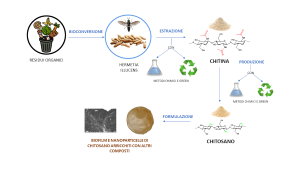
My doctoral research is centered on the sustainable extraction of chitin from the bioconverter insect Hermetia illucens—a species known for its efficiency in organic waste bioconversion. My work is focused on refining and optimizing green methodologies for extractin chitin and converting it into chitosan, a versatile biopolymer with significant potential in various industries.
The innovative aspect of my research lies in the application of environmentally friendly processes to minimize the ecological footprint of chitosan production. By exploring alternative, less impactful methods, my goal is to contribute to the advancement of sustainable practices in the field of biopolymer extraction.
The obtained chitosan will serve as the foundational basis for the creation of advanced formulations, including films and nanoparticles. These materials exhibit significant potential for application in both the cosmetic and healthcare sectors, offering innovative solutions for skin care products, wound healing, and other therapeutic purposes. Through my research, I endeavor to bridge the gap between scientific innovation and practical application, thereby contributing to the advancement of safer and more sustainable products in the market.
During my Ph.D., I gained expertise in sustainable insect farming, chitin extraction, and chitosan production using both chemical and green methods. I developed skills in sample characterization through FTIR, XRD, SEM, TGA, DSC, and DLS, and I evaluated their biological properties, such as antimicrobial and antioxidant activities. Additionally, I worked on the production of polymeric films and nanoparticles, managed long-term experiments, collaborated in interdisciplinary teams, and analyzed data.
How my position is funded
My doctoral scholarship was funded by the University of Basilicata as part of the PON RI 2014-2020 program, specifically under Priority Axis I "Human Capital," through Action IV.4 "PhDs and research contracts on innovation topics". The funding was also supported by the "Research and Innovation 2015-2017" (FSC) plan.
My motivations
I have a degree in Pharmacy from the University of Basilicata, and even during my academic career, I harbored a deep passion for being in the laboratory, finding it both stimulating and enjoyable. During my experimental thesis, this initial interest evolved into a strong passion for practical scientific exploration, which ultimately inspired me to pursue a PhD.
I hope to continue working in the field of research in the future, and I believe that my doctoral studies represent a significant milestone toward achieving this goal. The skills, knowledge, and experience gained during my Ph.D. have laid a solid foundation, and I am eager to build on it to advance my research further.
A day in a PhD student’s life
A typical day as a Ph.D. student is a dynamic blend of activities involving the laboratory, notebooks, and computer work. My day begins with conducting experiments and collecting data, which is then analyzed and interpreted using various tools and software. A portion of my time is also dedicated to the care and management of our insect colonies. This involves ensuring their optimal conditions for growth and productivity, monitoring their health, and making necessary adjustments to their environment.
My events
Participation in oral communications
Salvia R., Triunfo M., Guarnieri A., Ianniciello D., Scieuzo C., Zibek S., Hahn T., Falabella P. Insects an innovative source of chitosan: possible applications. XXVI Congresso Internazionale di Entomologia, Helsinky, Finlandia, 17-22 luglio 2022.
M. Triunfo, R. Salvia, C. Scieuzo, A. Guarnieri, D. Ianniciello, A. Franco, G. Donnarumma, B. Coltelli, A. De Bonis, P. Falabella. Caratterizzazione di chitina e chitosano derivati dal dittero Hermetia illucens per applicazione in campo cosmetico e farmaceutico. Congresso Nazionale Italiano di Entomologia. Palermo, 12-16 Giugno 2023.
Posters
"Diastereo- and enantioselective synthesis of precursors of the natural herbicide ascaulitoxin"; M. Caporale, D. Ianniciello, G. Marsico, A. Evidente, S. Superchi, P. Scafato; ChirItaly2022 IV Incontro Italiano sulla Chiralità Molecolare, Matera 19-21 settembre 2022, Atti, P7.
"Antimicrobial properties of the chitosan from different developmental stages of the bioconverter insect Hermetia illucens"; D. Ianniciello, R. Salvia, A. Guarnieri, M. Triunfo, C. Scieuzo, A. Franco, F.Giglio, A. Boschi, P. Falabella ; 3rd International Conference on Materials Science and Nanotechnology – Rome, Italy, October 3-5, 2022 (2022).
"Use of chitosan nanoparticles obtained from the bioconverter insect Hermetia illucens for the delivery of controlled-release drugs" ; A. Guarnieri, M. Triunfo, R. Salvia, C. Scieuzo, D. Ianniciello, A. Franco, R. Rinaldi, M.B. Coltelli, A. De Bonis, P. Falabella; 3rd International Conference on Materials Science and Nanotechnology – Rome, Italy, October 3-5, 2022 (2022).
"Chitosan-metal nanoparticles composite with enhanced antibacterial activity." ; M. Marsico ,M. Curcio, A. Galasso, P. Falabella, M. Triunfo, A. Guarnieri, R. Salvia, C. Scieuzo , D. Ianniciello a, R. Teghil , A. De Bonis ; 3rd International Conference BioMaH - Biomaterials and Novel Technologies for Healthcare 18-21 October 2022 (2022).
"Chitosan-metal nanocomposite with enhanced antibacterial and photocatalytic activity obtained by laser ablation in liquid" ; M. Marsico, M. Curcio, A. Galasso, A. Santagata, P. Falabella, M. Triunfo, A. Guarnieri, R. Salvia, C. Scieuzo, D. Ianniciello, R. Teghil, A. De Bonis ; EMRS, 2023 Spring Meeting 29 may-02 june (2023).
"Usage of insect-based chitosan for the preservation of fresh fruits" ; R. Salvia, C. Scieuzo, M. Triunfo, A. Guarnieri, D. Ianniciello, A. Franco, G. Lomonaco, F. Iannielli, A. Dolce, M. Ventura, A. De Bonis, P. Falabella ; XII European Congress of Entomology (ECE 2023) – Crete, Greece, 16-20 october 2023 (2023).
"Usage of insect-based chitosan for the preservation of fresh cherry tomatoes" ; M. Triunfo, R. Salvia, C. Scieuzo, A. Guarnieri, D. Ianniciello, A. Franco, G. Lomonaco, A. Boschi, A. Dolce, M. Ventura, A. De Bonis, P. Falabella ; XII European Congress of Entomology (ECE 2023) – Crete, Greece, 16-20 october 2023 (2023).
"Characterization of chitin and chitosan derived from the diptera Hermetia illucens for application in cosmetic and pharmaceutical fields" ; M. Triunfo, R. Salvia, C. Scieuzo, A. Guarnieri, D. Ianniciello, A. Franco, M. Rubino, M. Ventura, G. Donnarumma, B. Coltelli, A. De Bonis, P. Falabella ; XII European Congress of Entomology (ECE 2023) – Crete, Greece, 16-20 october 2023 (2023).
"Antimicrobial properties of the chitosan from different developmental stages of the bioconverter insect Hermetia illucens" ; C. Scieuzo, R. Salvia, A. Guarnieri, M. Triunfo, D. Ianniciello, A. Franco, G. Lomonaco, E. Derin, F. De Stefano, A. Dolce, A. De Bonis, D. Radnovic, P. Falabella ; XII European Congress of Entomology (ECE 2023) – Crete, Greece, 16-20 october 2023 (2023).
"Usage of insect-based chitosan for the preservation of fresh cherry tomatoes" ; R. Salvia, C. Scieuzo, M. Triunfo, A. Guarnieri, D. Ianniciello, A. Boschi, A. Franco, G. Lomonaco, A. Dolce, M. Ventura, A. De Bonis, P. Falabella ; CNIE Palermo 2023 (2023).
"Usage of insect-based chitosan for the preservation of fresh fruits" ; D. Ianniciello, R. Salvia, C. Scieuzo, M. Triunfo, A. Guarnieri, A. Boschi, A. Franco, G. Lomonaco, F. Iannielli, A. Dolce, M. Ventura, A. De Bonis, P. Falabella ; CNIE Palermo 2023 (2023).
"Use of chitosan nanoparticles obtained from the bioconverter insect Hermetia illucens for the delivery of controlled-release drugs" ; A. Guarnieri, R. Salvia, C. Scieuzo, M. Triunfo, D. Ianniciello, A. Franco, A. Boschi, B. Coltelli, P. Falabella ; CNIE Palermo 2023 (2023).
"Antimicrobial properties of the chitosan from different developmental stages of the bioconverter insect Hermetia illucens" ; C. Scieuzo, R. Salvia, A. Guarnieri, M. Triunfo, D. Ianniciello, A. Franco, S.Ouazri, A. De Bonis, D. Radnovic, P. Falabella ; CNIE Palermo 2023 (2023).
"Hermetia illucens chitosan for the preservation of fresh cherry tomatoes" ; D. Ianniciello, R. Salvia, C. Scieuzo, M. Triunfo, A. Guarnieri, A. Boschi, R. Rinaldi, A. Franco, G. Lomonaco, A. Dolce, M. Ventura, A. De Bonis, P. Falabella ; INSECTA International CONFERENCE 2024, May 14 - 16, 2024 @ATB in Potsdam, Germany (2024).
"Hermetia illucens chitin and chitosan: characterization for application in cosmetic and pharmaceutical fields" ; M. Triunfo, R. Salvia, Ca. Scieuzo, A. Guarnieri, D. Ianniciello, A. Franco, G. Donnarumma, B. Coltelli, A. De Bonis, P. Falabella ; INSECTA International CONFERENCE 2024, May 14 - 16, 2024 @ATB in Potsdam, Germany (2024).
"Antimicrobial properties of the chitosan of the bioconverter insect Hermetia illucens" ; C. Scieuzo, R. Salvia, A. Guarnieri, M. Triunfo, D. Ianniciello, A. Franco, G. Lomonaco, So. Ouazri, F. Giglio, F. De Stefano, A. De Bonis, P. Falabella ; INSECTA International CONFERENCE 2024, May 14 - 16, 2024 @ATB in Potsdam, Germany (2024).
"Chitosan from Hermetia illucens: an innovative and sustainable coating for strawberry preservation" ; M. Triunfo, A. Guarnieri, D. Ianniciello, G. Lomonaco, M. Rubino, L. Coviello, A. Vitti, M. Nuzzaci, R. Salvia, C.Scieuzo, P. Falabella ; INSECTA International CONFERENCE 2024, May 14 - 16, 2024 @ATB in Potsdam, Germany (2024).
"Hermetia illucens chitosan for the preservation of fresh fruits" ; R. Salvia, C. Scieuzo, M. Triunfo, A. Guarnieri, D. Ianniciello, A. Franco, G. Lomonaco, E. Derin, A. Dolce, M. Ventura, A. De Bonis, P. Falabella ; INSECTA International CONFERENCE 2024, May 14 - 16, 2024 @ATB in Potsdam, Germany (2024).
"Antimicrobial and cytocompatible silver nanoparticles-chitosan composite material, obtained by laser ablation in liquid" ; M. Marsico, M. Curcio, A. Galasso, P. Falabella, A. Guarnieri, R. Salvia, C. Scieuzo, D. Ianniciello, R. Teghil, A. De Bonis ; (EMRS) 2024 Spring Meeting, Strasbourg (Francia) 27-31 May (2024).
"Evaluation of biocompatibility and antimicrobial activity of electrophoretic deposited chitosan: exuvial chitosan and chitosan-silver nanoparticles" ; M. Marsico, M. Curcio, A. Galasso, P. Falabella, A. Guarnieri, R. Salvia, C. Scieuzo, D. Ianniciello, R. Teghil, A. De Bonis. ; (EMRS) 2024 Spring Meeting, Strasbourg (Francia) 27-31 May (2024).
“Chitosan derived from the diptera Hermetia illucens: innovative biopolymer for application in cosmetic and pharmaceutical fields”, R. Salvia, M. Triunfo, A. Guarnieri, D. Ianniciello, C. Scieuzo, M. Ventura, A. Franco, G. Donnarumma, A. De Bonis, P. Falabella, 4th MS NatMedDay - SALERNO February, 15-16, 2024.
“Antimicrobial properties of the chitosan from different biomasses of the bioconverter insect Hermetia illucens”, A. Franco, R. Salvia, A. Guarnieri, M. Triunfo, D. Ianniciello, G. Lomonaco, A. Dolce, M. Viola, C. Scieuzo, A. De Bonis, P. Falabella, 4th MS NatMedDay - SALERNO February, 15-16, 2024.
My Publications:
A. Guarnieri, M. Triunfo, C. Scieuzo, D. Ianniciello, E. Tafi, R. Salvia, A. De Bonis, P. Falabella, Antimicrobial properties of the chitosan from different developmental stages of the bioconverter Hermetia illucens, Sci. Rep. 12 (2022) 8084, https://doi.org/10.1038/s41598-022-12150-3.
Growing antimicrobial resistance has prompted researchers to identify new natural molecules with antimicrobial potential. In this perspective, attention has been focused on biopolymers that could also be functional in the medical field. Chitin is the second most abundant biopolymer on Earth and with its deacetylated derivative, chitosan, has several applications in biomedical and pharmaceutical fields. Currently, the main source of chitin is the crustacean exoskeleton, but the growing demand for these polymers on the market has led to search for alternative sources. Among these, insects, and in particular the bioconverter Hermetia illucens, is one of the most bred. Chitin can be extracted from larvae, pupal exuviae and dead adults of H. illucens, by applying chemical methods, and converted into chitosan. Fourier-transformed infrared spectroscopy confirmed the identity of the chitosan produced from H. illucens and its structural similarity to commercial polymer. Recently, studies showed that chitosan has intrinsic antimicrobial activity. This is the first research that investigated the antibacterial activity of chitosan produced from the three developmental stages of H. illucens through qualitative and quantitative analysis, agar diffusion tests and microdilution assays, respectively. Our results showed the antimicrobial capacity of chitosan of H. illucens, opening new perspectives for its use in the biological area.
E. Tafi, M. Triunfo, A. Guarnieri, D. Ianniciello, R. Salvia, C. Scieuzo, A. Ranieri, A. Castagna, S. Lepuri, T. Hahn, S. Zibek, A. De Bonis, P. Falabella, Preliminary investigation on the effect of insect-based chitosan on preservation of coated fresh cherry tomatoes, Sci. Rep. 13 (2023) 7030, https://doi.org/10.1038/s41598-023-33587-0.
Chitosan was produced from Hermetia illucens pupal exuviae by heterogeneous and homogeneous deacetylation. Tomato fruits (Solanum lycopersicum), that are one of the most grown and consumed food throughout the world, were coated with 0.5 and 1% chitosan, applied by dipping or spraying, and stored at room temperature or 4 °C, for a storage period of 30 days. Statistical analysis give different results depending on the analysed parameters: heterogeneous chitosan, indeed, had a better effect than the homogenous one in maintaining more stable physico-chemical parameters, while the homogenous chitosan improved the total phenols, flavonoids and antioxidant activity. Chitosan coatings applied by spraying were more effective in all the analyses. Chitosan derived from H. illucens always performed similarly to the commercial chitosan. However, a general better performance of insect-derived chitosan on the concentration of phenolics and flavonoids, and the antioxidant activity was observed as compared to the commercial one. Chitosan coating has already been successfully used for preservation of fresh fruits, as alternative to synthetic polymers, but this is the first investigation of chitosan produced from an insect for this application. These preliminary results are encouraging regarding the validation of the insect H. illucens as a source of chitosan.
M. Triunfo, A. Guarnieri, D. Ianniciello, L. Coviello, A. Vitti, M. Nuzzaci, R. Salvia, C. Scieuzo, P. Falabella, Hermetia illucens, an innovative and sustainable source of chitosan-based coating for postharvest preservation of strawberries, iScience 26 (2023) 2589–0042. doi:https://doi.org/10.1016/j.isci.2023.108576.
The ability of chitosan produced from pupal exuviae of Hermetia illucens to retard the decay of the local strawberry (Fragaria x ananassa) cultivar Melissa was investigated for the first time in this paper. The results demonstrated the effectiveness of insect chitosan compared to the commercial polymer in preserving and enhancing, at the same time, some physicochemical parameters (weight loss, pH and soluble solids content) and nutraceutical properties (total polyphenol content, total flavonoid content and total antioxidant activity) of strawberries stored at RT, 4C and at mixed storage conditions (4C + RT). Moreover, chitosan from H. illucens was also effective in reducing fungal decay and improving fruit shelf life. The obtained results confirm that insect chitosan, particularly deriving from H. illucens pupal exuviae, can be a viable alternative to crustacean one in safeguarding postharvest fruits.
M. Triunfo, E. Tafi, A. Guarnieri, D. Ianniciello, C. Scieuzo, R. Salvia, T. Hahn, S. Zibek, P. Falabella, Usage of chitosan from Hermetia illucens as a preservative for fresh Prunus species fruits: a preliminary analysis, Chem. Biol. Technol. Agric. 10 (2023) 101, https://doi.org/10.1186/s40538-023-00480-x.
Fruit and vegetables are highly perishable. In an era where reducing food waste is absolutely essential, packaging is important for maintaining the postharvest quality of these fresh products. Research is working to reduce the use of synthetic materials, not safe for the environment and human health. In this perspective, chitosan emerges as a viable solution for this purpose, as it is biodegradable, biocompatible and also safe for food application. The growing interest in using insects as a source of chitin has allowed for increased exploitation of insect-based waste products to recover valuable materials, such as biopolymers. The black soldier fly (Hermetia illucens L.) is the most widely reared species in Europe for feed production and waste management. In this work, fresh mature apricots (Prunus armeniaca L.), nectarines (Prunus persica vulgaris Mill.) and yellow peaches (Prunus persica var. laevis Gray) were coated with 0.5% and 1% chitosan from the pupal exuviae of Hermetia illucens, applied by spraying and stored at room temperature or 4 °C until they decay. Then, to validate the effectiveness of chitosan as a polymer for fruit preservation, several parameters including pH, TSS and weight loss were evaluated. The results showed that chitosan derived from the black soldier fly is as effective as or better than the commercially available crustacean chitosan in maintaining more stable some storage parameters in fresh apricots, nectarines and peaches. Thus, insects, especially Hermetia illucens, are confirmed as a viable alternative source of the polymer.
M. Triunfo, A. Guarnieri, D. Ianniciello, M. B. Coltelli, R. Salvia, C. Scieuzo, A. De Bonis, P. Falabella, A comprehensive characterization of Hermetia illucens derived chitosan produced through homogeneous deacetylation, Int. J. Biol. Macromol., 271 (2024) 132669, https://doi.org/10.1016/j.ijbiomac.2024.132669.
The increasing demand for chitin and chitosan is driving research to explore alternative sources to crustaceans. Insects, particularly bioconverters as Hermetia illucens, are promising substitutes as they process food industry waste into valuable molecules, including chitin. Chitosan can be produced by chitin deacetylation: hot deacetylation to obtain a heterogeneous chitosan, the commonly produced, and cold deacetylation to obtain a homogeneous chitosan, not widely available. The two different treatments lead to a different arrangement of the amine and acetyl groups in the chitosan structure, affecting its molecular weight, deacetylation degree, and biological activity. This is the first report on the production and chemical-physical and biological characterization of homogenous chitosan derived from H. illucens larvae, pupal exuviae, and adults. This work, in addition to the report on heterogeneous chitosan by our research group, completes the overview of H. illucens chitosan. The yield values obtained for homogeneous chitosan from pupal exuviae (3 and 7 %) are in the range of insect (2–8 %) and crustaceans (4–15 %) chitosan. The evaluation of the antioxidant activity and antimicrobial properties against Gram-negative (Escherichia coli) and Gram-positive (Micrococcus flavus) bacteria confirmed the great versatility of H. illucens chitosan for biomedical and industrial applications and its suitability as an alternative source to crustaceans.
A. Guarnieri, M. Triunfo, D. Ianniciello, F. Tedesco, R. Salvia, C. Scieuzo, E. Schmitt, A. Capece, P. Falabella, Insect-derived chitosan, a biopolymer for the increased shelf life of white and red grapes, Int. J. Biol. Macromol. 275 (2024) 133149, https://doi.org/10.1016/j.ijbiomac.2024.133149.
Post-harvest water loss and microbial infections are the root cause of the rapid deterioration of fresh fruit after the picking process, with both environmental and economic implications. Therefore, it is crucial to find solutions that can increase the shelf life of fresh fruits. For this purpose, edible coatings, naturally derived and nonsynthetic, are acknowledged as a safe strategy. Among polymeric coatings, chitosan is one of the most effective. In this work, this biopolymer, produced from chitin extracted from Hermetia illucens, an alternative and more sustainable source than crustaceans (the commercial one), was exploited to extend the shelf life of white and red grapes. Chitosan from H. illucens pupal exuviae, at 0.5 % and 1 % concentrations, was applied on both grapes, which were then stored at room temperature or 4 ◦C. The study of chemical-physical parameters such as weight loss, Total Soluble Solids and pH, demonstrated the effectiveness of the biopolymer, even better than crustacean chitosan. Moreover, the analysis of nutraceutical properties has demonstrated that this natural edible coating improves the quality of grapes, with beneficial effects for human health. The obtained results, therefore, confirmed the viability of using insect-chitosan as an alternative to crustaceans for the preservation of fresh food.
F. Giglio, C. Scieuzo, S. Ouazri, V. Pucciarelli, D. Ianniciello, S. Letcher, R. Salvia, A. Laginestra, D. L. Kaplan, P. Falabella, A glance into the near future: cultivated meat from mammalian and insect cells, Small Sci., (2024) 202400122, https://doi.org/10.1002/smsc.202400122.
The increasing global population and demand for meat have led to the need to find sustainable and viable alternatives to traditional production methods. One potential solution is cultivated meat (CM), which involves producing meat in vitro from animal stem cells to generate products with nutritional and sensory properties similar to conventional livestock-derived meat. This article examines current approaches to CM production and investigates how using insect cells could enhance the process. Cell sources are a critical issue in CM production, alongside advances in culture media, bioreactors for scalability, and scaffold development. Insect cells, compared to commonly used mammalian cells, may offer advantages in overcoming technological challenges that hinder cell culture development and expansion. The objective of this review is to emphasize how insects, as a cell source for CM production, could offer a more sustainable option. A crucial aspect for achieving this goal is a comprehensive understanding of the physiology of muscle and fat cells. In this work, the characteristics of insect and mammalian cells are compared, focusing particularly on muscle and fat cell development, regulatory pathways, hormonal regulation, and tissue composition. Insect cells are a promising source for CM, offering a sustainable and environmentally friendly alternative.
A. Franco, R. Rinaldi, F. Giglio, D. Ianniciello, A. Boschi, C. Scieuzo, R. Salvia, S. Letcher, D. Kaplan, P. Falabella, Edible insects: an overview on farming, from processing procedures to environmental impact, with a glimpse to traditional recipes and to future cultured meat, Entomologia Generalis, 44(4), 813-831, https://doi.org/10.1127/entomologia/2024/2651.
In the last decade, the use of insects has grown globally in relation to all sectors of the food chain. Insect farming offers a sustainable alternative to conventional livestock production, with lower environmental impacts and efficient resource use, as shown by Life Cycle Assessments (LCA). However, challenges in scaling production, standardizing processes, and addressing regulatory gaps remain. Continued research and collaboration are essential to fully realize the potential of insects as a sustainable protein source for human consumption. This review analyses some elements related to insect consumption, from the aspects of the hygiene, the different breeding and environmental impact to the description of the processing techniques, also providing the reader with some practical examples related to some world-famous recipes to offer an idea of how insects are perceived as food. The methods used in the processing of edible insects are critical to improving their nutritional content, safety, and palatability. The acceptance of insect-based cuisine can be increased by incorporating insects into traditional foods, thereby minimizing reactions of disgust. In addition, a look to the near future examines the possibilities of cultured meat made from insect cells, which presents encouraging paths toward the creation of sustainable protein, offering a revolutionary strategy that will transform future food production systems toward efficiency and sustainability. This is an absolutely innovative aspect for the production of edible proteins.
D. Ianniciello, A. Boschi, R. Rinaldi, A. Franco, F. Giglio, C. Scieuzo, R. Salvia, P. Falabella, A comprehensive review of entomophagy under legal, historical, safety, and nutritional profile, Entomologia Generalis, 44(4), 833-851. https://doi.org/10.1127/entomologia/2024/2524.
In the last decade the use of insects has grown globally in relation to all sectors of the food chain. In about 100 nations around the world, insects are traditionally part of the human diet; this practice is termed entomophagy. Although many studies have been conducted on the importance of edible insects as alternative sources of protein, most of them have focused on consumer acceptance or aversion/neophobia. As human food, insects have various advantages. They are rich in proteins, vitamins, and minerals and can be used in nutrition. Additionally, insects are efficient in bioconverting organic matter into biomass for food, adding the advantage of disposing of some by-products. Insects as foods of the future offer great promise, and their impact is expected to grow as new insights are pursued into quality, cultivation, nutrition, taste and safety. This review aims to be an overview of the laws regulating entomophagy, the history of insect consumption worldwide, safety considerations, and nutrient composition.