

Cagdas Ozdemir
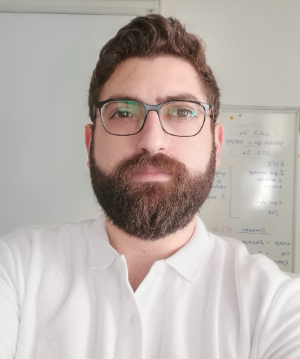
“The feeling and vision that my PhD studies have evoked in my mind: If there are thousands of strings that connect the past and the future, one of them is in my hands too.”
The PhD project aims to contribute to the preservation and protection of our archaeological heritage, memory and cultural wealth in an innovative and environmentally friendly way and to develop the region and its economic, touristic and social potential. The main motivation and objective of our work: A multidisciplinary approach and the use of natural substances from the plant world, bacteria and fungi for innovative, eco-sustainable cleaning and rehabilitation/stabilization of archaeological stone artifacts and metals.
The object of the research are the finds found in the archaeological sites of the Basilicata region. After a visual and cognitive analysis of the context from a historical, social and cultural point of view, through archival, cartographic, iconographic and bibliographic research, a macroscopic and microscopic evaluation of the material to be studied will be carried out, assessing the state and type of deterioration. It starts with the characterization of the material under study, followed by the search for innovative natural substances against microbiological corrosion for the restoration and conservation of cultural heritage.
The aim of my PhD studies is to understand what the materials are and to characterize them using various techniques in order to recognize them. These characterizations is carried out using a combination of several modern techniques and linear correlation between the techniques. These techniques are Scanning Electron Microscopy (SEM/EDS) combined with elemental microanalysis, X-ray fluorescence (XRF) and X-ray photoelectron spectroscopy (XPS). As a result of these technical analyses, it becomes clear which components the material is composed of. Then, the microbiological corrosion on the surface of the archaeological cultural heritage is examined. These studies begin by taking a swab sample from the surface of the material and determining the types of microorganisms that may be present on the surface. Then, if there is a microorganism isolated, phenotypic characterization of this microorganism by optical microscopy in reflected light, genotypic
characterization by DNA extraction, DNA similarity analysis using the BLAST program after PCR (Polymerase Chain Reaction). After all these analyzes, experiments are carried out within the scope of innovative, sustainable and green protection for the treatment of microbiological corrosion. For this, various plant extracts and secondary metabolites are aimed to be tested. These extracts will be subjected to HPLC analysis, toxicity tests and various microscopic methods for a better understanding of their efficacy. All analysis and testing methods will be carried out for the protection of cultural heritage and its safe transfer to future generations. We expect innovative, natural and improvable results from these analyses.
How my position is funded
My PhD studies and position are supported by Tech4You: Borsa Tech4You, Spoke 4 – Resilienza e accessibilità per la valorizzazione del patrimonio locale (culturale e naturale) GOAL 4.1 - PP 4.1.3. Borsa D.D. 1049/2022 Ecosistema dell’Innovazione “Tech4You - Technologies for climate change adaptation and quality of life improvement” - ambito di intervento “5. Climate, Energy and Sustainable Mobility” Codice identificativo ECS00000009 – CUP C43C22000400006.
The proposed doctoral project, consistent with objective 11.4 of the 2030 Agenda and with the National Recovery and Resilience Plan (P.N.R.R), aims to contribute, in an innovative and eco-compatible way, to the conservation and protection of our archaeological heritage, memory and cultural wealth that enhances the territory and its economic, tourist and social potential.
My motivations
After my master's degree, I decided to design my academic career as a researcher in order to carry out effective studies in the world of science. The reason why I especially advanced my doctoral studies in this field; both to take part in multidisciplinary studies and to bring innovative, natural and seminal methods to the literature in order to purify cultural heritage from microbiological corrosion.
My first goal during and after my PhD education: To complete the patent studies of an experimental kit project, which is currently in the idea and development phase. I want to do post-doctoral research. I aim my studies to include analysis on the research of new plant extracts, microorganisms and secondary metabolites, especially for the safe transfer of archaeological cultural heritage to future generations with natural methods (Green). My main motivation is to determine methods and analysis stages that will provide innovation to the literature in line with the vision and mission I have determined.
A day in a PhD student’s life
There are a few things I do routinely during the day. Firstly, I do a literature review on my PhD studies and other studies I am currently involved in, and I keep up to date with current sources. Secondly, making progress on my PhD thesis. I do this every day, weekdays and weekends, without exception
In a typical PhD day, apart from the above routine activities: I attend lectures or seminars during the day if there is a seminar-event that I have to attend. Then I perform the analysis techniques that we have planned for my PhD study on a daily basis. Apart from my PhD studies, I do research during the rest of the day to learn new languages and gain experience in laboratory analysis.
My events
International congresses in which I have personally participated and presented on the protection and transfer of cultural heritage to future generations:
8th Arch_rnt Symposıum In Greece - Archaeological Research & New Technologies "The Vulnerabılıty of Archaeologıcal Artefacts: The Importance of Innovatıve Conservatıon." Ozdemir Cagdas, Nicoletta Sgarro, Marta Kotlar, Marina Brailo Šćepanović, Lucia Emanuele, Laura Scrano,
8th Congresso CUCS 2024 – “Innovation and Sustainability in The Conservation of Archaeological Finds” Ozdemir Cagdas, Marta Kotlar, Marina Brailo Šćepanović, Lucia Emanuele, Laura Scrano,
YOCOCU 2024 Conference Istanbul – “ Investigation of the Potential of Opuntia Ficus-Indica as a Possible New Cleaning and Preservation Agent for Archaeological Cultural Heritage Due to its Anti-Biofilm Effect on Microbiological Corrosion Before and After Microbiological Corrosion Occurrence” Ozdemir Cagdas, Marta Kotlar, Marina Brailo Šćepanović, Lucia Emanuele, Laura Scrano,
My publications
Özdemir, Ç., Erol, A. & Scrano, L.” COMPARATİVE EXAMİNATİON OF İN VİTRO METHODS TO EVALUATE THE ANTİMİCROBİAL ACTİVİTY OF BİOMATERİALS”. Emergent Mater. (2024). https://doi.org/10.1007/s42247-024-00740-y
There is a multidisciplinary article on the antimicrobial activity of biomaterials and the determination of biofilm conditions that may form on their surfaces, which we wrote and discussed with the litearture during my PhD. Our article Antimicrobial activities of 21 different biomaterials and 5 different antimicrobial activity analyzes on 9 different microorganisms. The analysis and importance of which microorganism should be analyzed with which microorganism according to the chemical and physical state of all kinds of biomaterials and which method is more appropriate to choose is emphasized.