

Osasogie Faith Obasuyi

“The journey thus far has broaden my horizon and enhanced my research and innovative capabilities”
Contact: osasogiefaith.obasuyi@unibas.it
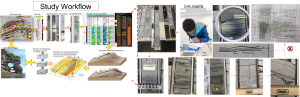
My doctoral project focused on the ‘’review of the depositional scenarios in the Middle Jurassic Garn Formation from seismic, Well and core logs and outcrop analogues Data, Halten Terrace, Norwegian Continental Shelf’’ with the aim of: (i) outlining the major tectonic features of the depositional setting at the Middle Jurassic; (ii) detecting the primary morpho-bathymetric conditions of sedimentation; (iii) discriminating the sedimentary processes responsible of the accumulation of the Garn’s deposits, (iv) identifying the nature of the depositional systems; (v) verifying the previous interpretations on the stratigraphic evolution of the Garn Formation at the scale of the Halten Terrace; (vi) reconstructing a general paleogeography of this sector of the Laurentian Seaway during the Middle Jurassic. The methods applied include seismic volume and surface attribute analysis, stratigraphy and electrofacies analysis from well logs, seismostructural analysis using large 3D seismic data, sedimentological core logging, analysis and interpretation. Sedimentary structures were described based on the terminology proposed by Collinson & Thompson (1982) and Harms et al. (1982). They included bedding type, grain-size trends, erosional contacts, presence of fossil imprints and bioturbation.
The major achievements obtained from the analysis performed across a number of hydrocarbon fields reveal incipient tectonic fragmentation of mostly NNE-SSW normal fault generating local synclinal-like bathymetric lows and hanging-wall depocentres. From a paleogeographic viewpoint, the Garn deposits was mostly supplied from the two margins and sedimentological observations suggest a conspicuous contribution of intra-basinal processes of erosion of previously accumulated sands and recycling. In many of these sandbodies, seismic attribute analysis provided new insight into the presence of large-scale, subaqueous bedforms that reflects complex patterns of marine currents, possibly tidally modulated, interplaying with the very few topographic reliefs induced by incipient tectonic deformations. Locally, three salient depositional architectures have been identified: (i) fan-shaped geometry (ii) strike-elongate geometry and (iii) transversal geometry. They have been interpreted respectively as: (i) subaqueous constriction-related deltas, (ii) tidal sand ridges (or bars) and (iii) tidal dunes, with the ridges volumetrically dominating over the other two depositional systems. The transitioning from high to weak amplitude zones at short distances on Root Mean Square (RMS) maps have been interpreted to reflect hypothetical stratigraphic boundaries / intervals that separate sand packages with high amplitude from heterolithic packages with low amplitude. The seismic-stratigraphic analysis reveals that the Garn Formation can be divided into 4 informal units, based on their different GR response, from sand accumulation during an initial stage of forced-regression, lowstand and subsequent transgression. This framework is consistent with previous interpretation that infer the Garn Formation as a diachronous succession, reflecting the presence of fault-induced, morpho-bathymetric differences among adjacent half grabens of the Halten Terrace during the Middle Jurassic, the nature of the deposits as observed in the seismic lines seems to indicate forward-stepping or compensational stacking of the various composing sub-units. These new findings supported by data served to clarify many aspects and reconstructions of the Garn’s depositional environments that suffered from the mono-dimensional extension of well-core data and sub-seismic-scale geometries
How my position is funded
The doctoral reserch is fully funded by DNO AS NORGE
My motivations
As a young female researcher with teaching experience, I am passionate and self-motivated to contribute to knowledge by addressing scientific, academic, and societal challenges. This role presents an ideal opportunity for me to refine and expand my research and teaching skills. As envisage, I have actively engaged in multi-dimentional qualitative and quantitative methods during this research projects and the collaborative work with academic experts has significantly broadened my knowledge and honed my skills, which I believe will be valuable assets to my future scientific engagements.
A day in a PhD student’s life
- Check my official emails
- Review literatures
- Data sorting
- Learn applicability of a method or how to use a software to visualize, analyse and interprete large data sets
- Run 3D models on large subsurface data sets
My events
- 10th International Tidalite Conference, Matera, Italy, 2022
- British Sedimetological Research Group (BSRG) annual general meeting, Southampton, UK, 2022
- International Association of Sedimentologist Conference, Aberdeen, Scotland, UK, 2024
- Societa Geologica Italiana conference, Potenza, Italy, 2023
- IAS Field trip to the Middle Jurassic Berrearaig Sandstone, Isle of skye, Scotland, UK. International Association of Sedimentologist, Aberdeen, 2024
- A geological journey across an Oregen: From mountain-belt to Foreland Areas of the Southern Apennine, Italy 2023
- Tidal Force Seminar and workshop, Stavanger, Norway
- A field trip on From Marginal to axial tidal-strait facies in the Early Pleistocene Siderno strait, Italy. Tidalite field trip special volume, Materal Italy 2021