

Fabiana Giglio
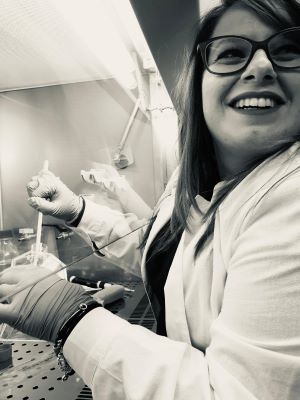
"Antimicrobial peptides (AMPs) from insects: the biotechnological solution to antibiotic resistance."
Contact: fabiana.giglio@unibas.it
My doctoral project aims to develop innovative solutions to address emerging socio-health issues, particularly the increasing resistance to antibiotics, for which adequate therapies are not yet available. These issues are compounded by a slowdown in the development of new drugs and the rising incidence of multidrug-resistant bacteria, which undermine the treatment of infectious diseases and increase the risk of severe complications. Moreover, pharmacological residues released into the environment contribute to the selection of resistant bacteria, posing a significant threat to public health and the environment. In response to these challenges, the project focuses on utilizing antimicrobial peptides (AMPs) derived from insects as potential alternative therapies. AMPs are small protein molecules with demonstrated antibacterial, antitumor, and antiviral activities, offering new opportunities to combat antibiotic resistance and other emerging infections. Insects, due to their biodiversity, are a promising source of AMPs that can be applied not only in the biomedical field but also in the agriculture and food sectors. The project involves isolating and characterizing AMPs from insects, and assessing their efficacy against resistant bacterial strains, tumor cells, and viruses. The methodologies employed will include protein isolation techniques, antimicrobial activity assays, and biochemical analyses. The objective is to identify peptides with high therapeutic potential and develop new approaches for infection prevention and treatment, thereby enhancing human health and providing effective alternatives to conventional treatments. This research aims to offer solutions for current health emergencies and explore practical applications of AMPs across various sectors, strengthening prevention and treatment strategies in clinical and environmental contexts.
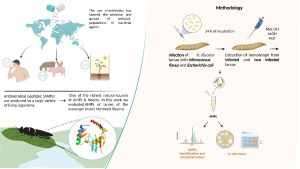
How my position is funded
The position is funded by the Ministry of University and Research (MUR) through a scholarship specifically allocated to the Curriculum in Applied Biology. The scholarship is tied to the mandatory topic "Identification and characterization of insect peptides with antimicrobial activity," providing the necessary financial support for research in this field.
My motivations
I chose to pursue a PhD after completing a Bachelor's degree in Biotechnology, a Master's degree in Biotechnology for Medical, Pharmaceutical, and Veterinary Diagnostics, and a Master's in Clinical Cytogenomics and Cytogenetics Laboratory. These academic experiences not only provided me with a solid scientific foundation but also fueled my passion and motivated me to continue my studies through a PhD. For me, the PhD represents an opportunity to further deepen my knowledge and make a significant contribution to research in the field of antibiotic resistance and infectious diseases. The possibility of working on innovative projects, such as the development of new antimicrobial, antiviral, and anticancer peptides, is extremely stimulating and allows me to tackle scientifically significant challenges. Moreover, the PhD program has offered me the opportunity to spend six months abroad at the University of Novi Sad (Serbia), Faculty of Sciences, Department of Biology and Ecology. This international experience has enriched my academic journey, broadened my skills, and provided me with a global perspective in my research field. After graduation, I expect to apply the skills and knowledge acquired in academia or industry. I am motivated to contribute to the development of innovative solutions for public and environmental health by collaborating with research institutes, universities, or biotechnology companies. My goal is to become a recognized expert in the field of applied biochemistry, improving therapeutic strategies and addressing scientific challenges with passion and dedication.
A day in a PhD student’s life
My typical PhD day is well-structured to maximize effectiveness and efficiency in scientific research. I start the day early, often with a review of planned activities and objectives. This phase includes consulting my schedule to plan experiments, meetings, and other relevant tasks. Much of my day is dedicated to experimentation and data analysis. This may involve laboratory work, where I prepare samples and conduct experiments for the isolation and characterization of antimicrobial, antiviral, and anticancer peptides. I employ various techniques, such as bioinformatics analysis, antimicrobial activity assays, and advanced methods like antimicrobial peptide cloning using recombinant DNA technology. Data analysis requires the use of specific software for processing and interpreting results. An important aspect of my research involves rearing Hermetia illucens, an insect used as a peptide source. Some days of the week are dedicated to managing and caring for these cultures. This task includes regulating environmental conditions, feeding the insects, and collecting larvae to ensure optimal peptide production and the validity of experimental results. Another significant part of my day is devoted to reviewing scientific literature to stay updated on recent developments in my research field. This allows me to identify new study areas and adapt my methodologies to the latest discoveries. Throughout the day, I also participate in group meetings and discussions with my supervisor. These moments are crucial for discussing project progress, solving problems, and planning the next stages of research. Regular communication with my team is essential for ensuring project success and for discussing results and strategies. Finally, I dedicate time to preparing presentations and writing scientific articles. This aspect is crucial for disseminating findings and participating in conferences and publications, providing opportunities to share my progress with the scientific community. In summary, my PhD day balances laboratory work, insect rearing, data analysis, scientific updates, and communication, all aimed at achieving the research project goals and contributing to scientific advancement in my field.
My events
Contributions in conference proceedings accepted as oral presentations
C. Scieuzo, R. Salvia, F. Giglio, R. Rinaldi, M. Rubino, E. Derin, F. De Stefano, M. Monti, F. Cozzolino, A. Sgambato, D. Nicolosi, Z. Popovic, P. Falabella. Valutazione in vitro dell'attività antibatterica e antitumorale della frazione peptidica estratta dall'emolinfa di Hermetia illucens. Congresso Nazionale Italiano di Entomologia. Palermo, 12-16 Giugno 2023
C. Scieuzo, R. Salvia, F. Giglio, R. Rinaldi, M. Rubino, E. Derin, F. De Stefano, M. Monti, F. Cozzolino, A. Sgambato, M. Lekka, A. Vilcinskas, P. Falabella. In vitro evaluation of the antibacterial and anticancer activity of the peptide fraction extracted from the hemolymph of Hermetia illucens. XII European Congress of Entomology. Crete 16-20 October 2023
Contributions in conference proceedings accepted as posters
F. Giglio, M.A. Castiglione Morelli, I. Matera, C. Sinisgalli, R.Rossano, A. Ostuni. Muscari comosum L.: the ancient wild plant protagonist of the Mediterranean diet and its effects on liver cancer cells. 45th FEBS Congress. 3-8 Luglio 2021, Lubiana, Slovenia. FEBS Open Bio, Volume11 Supplement 1 July 2021
Matera I, V. Abruzzese, R. Miglionico, F. Giglio, F. Bisaccia and A. Ostuni, "Transcriptome Analysis of Abcc6-Silenced HepG2 Cells Suggested New Roles for the Transporter", 61° SIB2021 Congress, VIRTUAL EDITION 23-24 SEPT 2021
F. Giglio, I. Matera, A. Pistone, A. Petillo and A. Ostuni, "Different Biological Effects of Muscari Comosum's Extracts on Hepatocarcinoma (HepG2) and Immortalized Human Hepatocyte (IHH) Cell Lines", 61° SIB2021 Congress, 23-24 SEPT
Carmen Scieuzo, Rosanna Salvia, Fabiana Giglio, Roberta Rinaldi, Andrea Boschi, Heiko Vogel, Alessandro Sgambato, Patrizia Falabella. “BIOINFORMATIC ANALYSIS OF ANTIMICROBIAL PEPTIDES IDENTIFIED IN THE BLACK SOLDIER FLY (BSF) DIPTERAN HERMETIA ILLUCENS (DIPTERA: STRATIOMYIDAE)”; Italy. XXVI International Congress of Entomology (ICE), Helsinki, Finland, July 17-22, 2022.
Dolores Ianniciello, Rosanna Salvia, Anna Guarnieri, Micaela Triunfo, Carmen Scieuzo, Antonio Franco, Fabiana Giglio, Andrea Boschi, Patrizia Falabella. ANTIMICROBIAL PROPERTIES OF THE CHITOSAN FROM DIFFERENT DEVELOPMENTAL STAGES OF THE BIOCONVERTER INSECT HERMETIA ILLUCENS. III International Conference on Materials Science and Nanotechnology – Rome, Italy, October 5, 2022
XXVII Congresso Nazionale Italiano di Entomologia, 12-16 Luglio 2023. F. Giglio, C.Scieuzo, R. Salvia, R. Rinaldi, A. Franco, M. Rubino, E. Derin, F. De Stefano, S.Todisco, A. Capece, P. Falabella. Optimization of the recombinant production of Hermetia illucens antimicrobial peptides in yeast.
XXVII Congresso Nazionale Italiano di Entomologia, 12-16 Luglio 2023. R. Rinaldi, C. Scieuzo, R. Salvia, F. Giglio, M. Rubino, E. Derin, F. De Stefano, A. Franco, P. Falabella. Evaluation of the antitumoral activity of H.illucens hemolymph.
XXVII Congresso Nazionale Italiano di Entomologia, ■ 12-16 Luglio 2023. Carmen Scieuzo, Rosanna Salvia, Fabiana Giglio, Roberta Rinaldi, Mariarita Rubino, Emine Derin, Federica De Stefano, Maria Monti, Flora Cozzolino, Alessandro Sgambato, Daria Nicolosi, Zeljko Popovic, Patrizia Falabella. Valutazione in vitro dell'attività antibatterica e antitumorale della frazione peptidica estratta dall'emolinfa di Hermetia illucens.
XXVII Congresso Nazionale Italiano di Entomologia, 12-16 Luglio 2023. Andrea Boschi, Carmen Scieuzo, Rosanna Salvia, Fabiana Giglio, Roberta Rinaldi, FedericaBertocchini, Patrizia Falabella. Galleria mellonella l'insetto mangiaplastica, fonte di molecole utili alla biodegradazione di polietilene e polipropilene
A. Franco, C. Scieuzo, R. Salvia, V. Pucciarelli, F. Giglio, R. Rinaldi, F. Iannielli, F. De Stefano, S. Ouazri, L. Borrelli, F. Bovera, E. Schmitt, P. Falabella. Evaluation of antimicrobial activity of lipids extracted from Tenebrio molitor. XXII European Congress of Entomology 16-20 Ottobre 2023.
Vanja Tatić, Fabiana Giglio, Ana Volarić, Dragan Radnović, Patrizia Falabella, Željko D. Popovic. Insect-derived active peptides: alternatives for combating multidrug-resistant bacteria. XXII Conference of the Serbian Biochemical Society, 21-23 Settembre 2023
Carmen Scieuzo, Rosanna Salvia, Fabiana Giglio, Roberta Rinaldi, Mariarita Rubino, Emine Derin, Federica De Stefano, Maria Monti, Flora Cozzolino, Alessandro Sgambato, Daria Nicolosi, Zeljko Popovic, Patrizia Falabella. Antibacterial and anticancer activity of the peptide fraction extracted from the haemolymph of Hermetia illucens. INSECTA 2024 Postdam, Germany.
XXII European Congress of Entomology 16-20 Ottobre 2023. R. Salvia, C. Scieuzo, A. Franco, F. Giglio, S. Ouazri, A. Boschi, M. Monti, F. Cozzolino, H. Vogel, P. Falabella. Identification and Functional Characterization of Toxoneuron nigriceps Ovarian Proteins Involved in the Early Suppression of Host Immune Response
Carmen Scieuzo, Rosanna Salvia, Fabiana Giglio, Roberta Rinaldi, Mariarita Rubino, Emine Derin, Federica De Stefano, Angela Pascale, Patrizia Falabella. The insect Hermetia illucens: a sustainable source of molecules of high biological and economic value. 4th MS-NatMedDay, NATURAL MOLECULES AND MOLECULAR COMPLEXES 2024
My publications
Muscari comosum L. Bulb Extracts Modulate Oxidative Stress and Redox Signaling in HepG2 Cells
Authors: Fabiana Giglio, Maria Antonietta Castiglione Morelli, Ilenia Matera, Chiara Sinisgalli, Rocco Rossano, Angela Ostuni
Journal: Molecules, MDPI
Date: January 14, 2021
Volume: 26, Issue 2, Article 416
Link: https://doi.org/10.3390/molecules26020416
Abstract: This publication investigates the biological effects of Muscari comosum L. bulb extracts on oxidative stress and redox signaling in human hepatocellular carcinoma cells (HepG2). The aqueous and methanol extracts were analyzed for their total polyphenol and flavonoid content, and their antioxidant activity was assessed using various in vitro assays. The results indicate that these extracts exhibit concentration- and solvent-dependent antioxidant activity and modulate the expression of genes involved in redox pathways, including Nrf2, SOD-2, GPX1, ABCC6, and ABCG2. Additionally, NMR metabolomics analysis suggests that HepG2 cells treated with Muscari comosum extract experience changes in metabolites involved in various metabolic pathways.
In Vitro Evaluation of the Antibacterial Activity of the Peptide Fractions Extracted from the Hemolymph of Hermetia illucens (Diptera: Stratiomyidae)
Authors: Carmen Scieuzo, Fabiana Giglio, Roberta Rinaldi, Marilena E. Lekka, Flora Cozzolino, Vittoria Monaco, Maria Monti, Rosanna Salvia, Patrizia Falabella
Journal: Insects, MDPI
Date: September 18, 2021
Volume: 11, Issue 9, Article 2677
Link: https://doi.org/10.3390/ani11092677
Abstract: This study investigates the antibacterial activity of peptide fractions extracted from the hemolymph of Hermetia illucens larvae, an insect known for its robust immune system. The research focused on identifying antimicrobial peptides (AMPs), which are small molecules crucial in the innate immune response. The larvae were infected with either Escherichia coli (Gram-negative) or Micrococcus flavus (Gram-positive) bacteria, while uninfected larvae served as controls. Using microbiological assays and mass spectrometry, the researchers identified 33 AMPs, of which 20 were expressed under all conditions, and 13 were differentially expressed depending on the bacterial challenge. These differentially expressed AMPs could have more specialized antibacterial functions.
Exosomes and Signaling Nanovesicles from the Nanofiltration of Preconditioned Adipose Tissue with Skin-B® in Tissue Regeneration and Antiaging: A Clinical Study and Case Report
Authors: Fabiano Svolacchia, Lorenzo Svolacchia, Patrizia Falabella, Carmen Scieuzo, Rosanna Salvia, Fabiana Giglio, Alessia Catalano, Carmela Saturnino, Pierpaolo Di Lascio, Giuseppe Guarro, Giusy Carmen Imbriani, Giuseppe Ferraro, Federica Giuzio
Journal: Medicina, MDPI
Date: April 21, 2024
Volume: 60, Issue 4, Article 670
Link: https://doi.org/10.3390/medicina60040670
Abstract: This three-year clinical trial aimed to demonstrate the advantages of using signaling nanovesicles produced by preconditioned adipose-derived stem cells (ADSCs) in tissue regeneration and antiaging. The study compared the efficacy of these signaling vesicles, which contain mRNA, microRNA, growth factors, and bioactive peptides, to traditional therapies using adipose tissue disaggregates. The innovative approach involves microfiltration and ultrafiltration to remove fibrous tissue, cellular debris, and large molecules, making the therapy safer and minimally invasive. The results showed significant improvements in dermal and epidermal regeneration, as assessed by the Berardesca Scale, Numeric Rating Scale (NRS), and Modified Vancouver Scale (MVS). The method proved effective in treating dermal wrinkles and facial tissue furrows, offering a promising alternative to traditional antiaging and skin regeneration therapies.
A Glance into the Near Future: Cultivated Meat from Mammalian and Insect Cells
Authors: Fabiana Giglio, Carmen Scieuzo, Sofia Ouazri, Valentina Pucciarelli, Dolores Ianniciello, Sophia Letcher, Rosanna Salvia, Ambrogio Laginestra, David L. Kaplan, Patrizia Falabella
Journal: Small Science
Article Number: 2400122
Publisher: Wiley
Date: July 8, 2024
Link: https://doi.org/10.1002/smsc.202400122
Abstract: The increasing global population and demand for meat have necessitated the search for sustainable and viable alternatives to traditional meat production. One promising solution is cultivated meat (CM), which involves producing meat in vitro from animal stem cells to generate products with nutritional and sensory properties similar to conventional livestock-derived meat. This article reviews current approaches to CM production and explores the potential of using insect cells to enhance the process. Key issues addressed include cell sources, culture media, scalability of bioreactors, and scaffold development. Insect cells may offer advantages over mammalian cells in overcoming technological challenges related to cell culture development and expansion. The review emphasizes the sustainability of using insects as a cell source for CM, comparing the characteristics of insect and mammalian muscle and fat cells, and highlighting insect cells as a promising and environmentally friendly alternative.