

Andrea Boschi
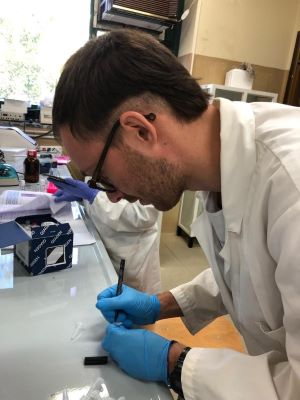
“Navigating a transformative PhD journey, merging global collaboration and innovative research in sustainable development.”
Contact: andrea.boschi@unibas.it
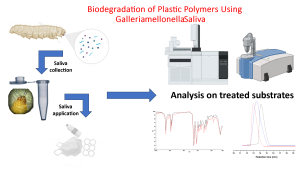
My research project focuses on using the Galleria mellonella lepidoptera to search for molecules useful in the biodegradation of plastic polymers. What we would like to achieve is the development of new alternative and effective methods for the rapid biodegradation of plastic polymers. To achieve this objective, we have focused on the role of the saliva of this insect, extracting it and then applying it to various plastic polymers, which are then analysed using different techniques (Gel Permeation Chromatography, InfraRed Analysis, Scanning Electron Microscope, Gas chromatography-Mass Spectrometry). In addition, topics relating to molecular biology techniques such as cloning and expression of certain genes, RNA interference, and gene expression evaluation by means of rt_PCR were also covered and addressed.
How my position is funded
My research grant is financed by INPS through the call: “Ricerca e selezione di dottorati di ricerca in Industria 4.0 - Scienze statistiche e attuariali – Sviluppo sostenibile – INPS e Welfare per l’erogazione di borse di studio per dottorati di ricerca aggiuntive rispetto a quelle finanziate dal MUR e riservate ai figli e orfani di iscritti alla Gestione unitaria delle prestazioni creditizie e sociali e di pensionati utenti della Gestione dipendenti pubblici” a.a. 2020-2021 (XXXVI ciclo) (https://portale.unibas.it/site/home/didattica/dottorati-di-ricerca/cicli-precedenti/articolo9555.html)
My motivations
I chose to pursue a PhD because it presented a valuable opportunity to enhance my skills and broaden my cultural background. Additionally, I had the chance to participate in an ambitious and essential project for sustainable development, a cause I am deeply passionate about. During the PhD program, I anticipated the opportunity to engage with individuals from diverse backgrounds and cultures, collaborate with talented researchers, and spend time abroad. This experience would not only improve my professional skills but also enhance my interpersonal abilities and proficiency in foreign languages.
A day in a PhD student’s life
My typical day as a PhD student is highly variable, depending on the needs, the type of experiment scheduled, and the location of my work. In addition to the University of Basilicata, I have conducted my activities at research centers and universities within the Autonomous Community of Madrid (Spain). Generally, my activities include the care and maintenance of insects, the planning (together with my tutors) and execution of various experiments and tests we aim to conduct, the analysis of the obtained results, and extensive work on the state-of-the-art analysis. I also engage in regular meetings with my research group to discuss progress and refine our approaches, attend seminars and conferences to stay updated on the latest developments in my field, and contribute to the preparation of scientific publications.
My events
Conferences / Congresses:
XXVII Congresso Nazionale Italiano di Entomologia-CNIE 2023 (Palermo)
3rd International Conference on Materials Science and Nanotechnology
Evento finale Progetto PSR Basilicata 2014-2020 Sottomisura 16.2: “L’insetto Hermetia illucens allevato su scarti dell’agroalimentare per la produzione di mangimi per animali da carne destinati al consumo umano – FeedInsect”
Evento finale Progetto POR FESR Basilicata 2014 - 2020 AAA: SAFE SOS: “Nuove molecole ad attività antimicrobica, anticancro ed antivirale: soluzioni alternative a fronte di tre tra le principali emergenze socio- sanitarie”
Seminars:
Nuovi biorecettori olfattivi per applicazioni sensoristiche nell’industria agro-alimentare
Vaccini e Pandemie (SARS-Cov2 e COVID-19)
Storie di spettrometria di massa
Utilizzo di fonti proteiche innovative nell'alimentazione animale
Evoluzione del virus e stato della pandemia
The CRISPR health revolution
Food packaging compostabile: la prossima generazione di imballaggi sostenibili perpreservare l’ambiente in un contesto di economia circolare
Natural Products from Seagrasses
MIX-UP seminar series: “Insects and bioremediation: plastic degradation by wax worm enzymes”
Target innovativi nella lotta contro il tumore
Classici e più recenti bersagli molecolari per il trattamento del COVID 19
Dall'invenzione della carta all'iPhone: Come le nanotecnologie hanno cambiato il mondo
Motori molecolari: realtà o fantascienza?
Nanotecnologie per la medicina di precisione
Aplicaciones en qPCR y PCR Digital
Innovative solutions toward the EU bioeconomy: the contribution of the insect sector to strengthening circular value chains in rural areas; (IPIFF (International Platform of Insects for Food and Feed))
The potential of enzymatic plastic recycling – “ENZYCLE, RECOVER, BIZENTE EUs Horizon 2020”
My Publications:
Beyond Microbial Biodegradation: Plastic Degradation by Galleria mellonella (DOI: 10.1007/s10924-023-03084-6)
The article reviews Galleria mellonella's potential in addressing plastic waste through its polyethylene-degrading enzymes. It summarizes plastic production, common degradation methods, and advances in biological solutions, emphasizing Galleria mellonella as a promising alternative to traditional disposal techniques.
An Overview of Ovarian Calyx Fluid Proteins of Toxoneuron nigriceps (Viereck) (Hymenoptera: Braconidae): An Integrated Transcriptomic and Proteomic Approach (DOI: 10.3390/biom13101547)
The study identifies ovarian calyx fluid proteins in Toxoneuron nigriceps that disrupt the immune system of its host, Heliothis virescens. These proteins induce oxidative stress, cytoskeletal changes, and hemocyte dysfunction, aiding parasitization.
A comprehensive review of entomophagy under legal, historical, safety, and nutritional profile (DOI: 10.1127/entomologia/2024/2524)
The article reviews the global rise of entomophagy, the practice of eating insects, highlighting their nutritional value, efficiency in bioconversion, and potential as sustainable protein sources. It discusses the history, safety, laws, and nutrient composition of edible insects, emphasizing their promise as future foods.
Edible insects: an overview on farming, from processing procedures to environmental impact, with a glimpse to traditional recipes and to future cultured meat (DOI: 10.1127/entomologia/2024/2651)
The article explores insect farming as a sustainable alternative to livestock, highlighting its low environmental impact, efficient resource use, and challenges like scaling, standardization, and regulations. It reviews hygiene, breeding, processing techniques, and traditional recipes to improve safety, nutrition, and acceptance. It also examines cultured insect meat as an innovative, sustainable protein source for the future.