

Antonio Dolce
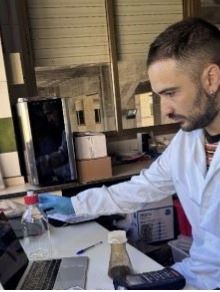
“A journey of discovery and innovation, where curiosity meets science and each step forward paves the way for new frontiers of knowledge.”
Contact: antonio.dolce@unibas.it
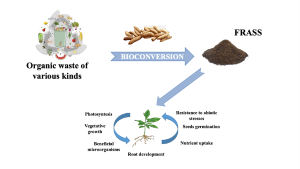
The breeding of insects on an industrial scale, and in particular the bioconverter insects is a fast-growing production reality for two main reasons: the search for new sources of protein for animal and human nutrition, and the need to dispose of an increasing amount of by-products from various industrial sectors. The black soldier fly, Hermetia illucens L. (Diptera: Stratiomyidae), is one of the most widely bred species for both feed production and waste management. Its importance is linked to the possibility of rearing its larvae on decomposing organic substrates, both of plant and animal origin, converting them into larval biomass rich in proteins and lipids, which can be used, depending on the type of substrate the larvae feed on, in the production of feed, biofuels and cosmetics. The by-products of H. illucens rearing are the dead adults and the pupal exuviae, i.e. the exoskeleton of the pupae resulting from the pupa-to-adult molt, from which chitin can be extracted. Chitin is the most widespread biopolymer on Earth, after cellulose, and is synthesised by crustaceans, insects, fungi and yeasts. Due to their properties, chitin and its derivative, chitosan, have been receiving enormous interest in recent years for their use as new functional biomaterials. The main source for the industrial production of chitin is waste from the fishing industry. Insects provide a sustainable and readily available alternative source of chitin, which is approximately 25-60% of the dry weight of their exoskeleton. Due to its crystalline structure, which gives it a high hydrophobicity, chitin is insoluble in water, organic and inorganic solvents and common acidic or basic solutions. This poor solubility negatively affects its processing and application, limiting the production of chitin products. To broaden its field of application, chitin is deacetylated into chitosan, its most soluble derivative. Due to its properties, such as biodegradability, biocompatibility, non-toxicity, antioxidant, humectant and antimicrobial activity, chitosan is used in industrial and biomedical applications (agriculture, food, tissue engineering, wastewater treatment, drug delivery, wound healing, cosmetics). In agriculture, chitosan, thanks to its antifungal, antibacterial and antioxidant properties, is used as a biostimulant to enhance plant defence mechanisms and to regulate metabolic processes. It can improve nutrient uptake, nutrient efficiency and phytohormone production, stimulate root growth and overall crop quality and also act on osmotic regulation. Chitosan can also be combined with other compounds to enhance certain biostimulant and soil-conditioning characteristics. Hydrogels are usually used as soil conditioners in agriculture, administered to the soil as granules that swell after watering the soil and release chitosan/minerals to plant roots in case of excessive soil dehydration. Another by-product of H. illucens farming are larval excrements (frass), which can be used as a mixed composted soil conditioner in agriculture. The effects of using frass may differ depending on both the physico-chemical characteristics such as temperature, pH, moisture content and nutrient content, and the treatment conditions used. The characteristics of larval frass of H. illucens reported in the literature indicate that the nutrient composition of the plants varies in relation to the food substrate supplied to the larvae. Furthermore, frass can be used immediately after production (subjected to a treatment for 1 h at 70°C), as it contains nitrogen in the form that can already be assimilated by plants, unlike other natural fertilisers that require storage before use, releasing CO2 and other greenhouse gases into the environment.
How my position is funded
PhD Student in Applied Biology, PNRR-Ricerca D.M. 117/2023.
My motivations
The PhD program represents an opportunity to put into practice the knowledge and skills acquired during my university years and to continue my cultural and personal development. It marks the final stage of my educational journey and simultaneously the beginning of my professional career. During the PhD program, there may also be an opportunity to spend time abroad at a university or research center: I believe that exchanging methods and knowledge with foreign professors would be a great opportunity to open new perspectives, build strong collaborative networks for this project, and improve my proficiency in English.
A day in a PhD student’s life
The day usually starts early, with the first hours dedicated to reading scientific articles, reviewing literature, or writing parts of their thesis or articles for publication. This is followed by experimental work or data collection, involving lab work, experiments, sample analysis, or tests. Lunch is often shared with fellow PhD students, providing a moment to relax and discuss work, as well as topics unrelated to research. The afternoon is dedicated to meetings with the supervisor or research team, discussing project progress, planning future experiments, or reviewing scientific articles. Alternatively, if there are no meetings, the work from the morning continues, or this time is used to analyze the data collected during the day, write reports, or prepare presentations. After finishing these tasks, they usually conclude their workday, although some may stay longer in the lab or office, especially if deadlines are approaching.