

A personal page Aji Kyare

“An exciting but a challenging learning and relearning experience”
Contact: ajimaina.kyari@unibas.it
“Integrated geological and structural analyses of the axial zone of the southern Apennine fold-and-thrust belt”
The research project is multidimensional and aims at providing solution to geological, hydrogeological and structural issues surrounding the axial zone of the southern Apennine fold-and- thrust belt. The PhD research programme will in particular examine the Agri Valley area in the southern Appennine using field data, remote sensing data, subsurface data from core logs, seismics and well logs, combined with 3D structural modelling/digital modelling. The field data will help to understand the timing activity of the transtensional and thrust faults and the distribution of small structures in the vicinity of these faults. The research program objectives are to carry out a detailed geological and structural analyses of the axial zone of the southern Apennines fold and thrust belt. In detail, the Agri Valley area of the Basilicata Region, Italy, will be the target of the proposed research project.
Methodology
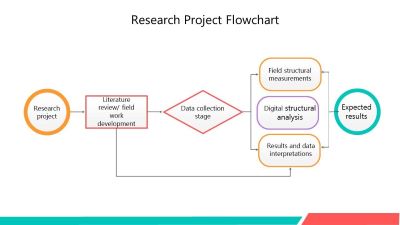
Field studies: A detailed geological field mapping that incorporates both stratigraphical and structural components will be conducted. Structural measurements of faults, folds and fractures will be added to ascertain the deformational pattern of both syn-orogenic and post-orogenic sequences within the Agri Valley area.
Digital Structural Analysis
This is performed employing 3D modelling Structure from Motion (SfM), a 3D photogrammetry that is obtained based on a considerable number of partly overlapping high-resolution digital photographs. Furthermore, I use the Digital Outcrop Model (DOM), i.e. a digital representation of the outcrop surface that reproduces observed facies and structure architecture which can be obtained from one or more generated results from the SfM. Finally, the Discrete Fracture Network (DFN) modelling allows detailed analyses of fracture pattern and architecture. The input parameters for identified facies include fracture set, aperture, orientation, length, aspect ratio and volumetric fracture intensity. The expected output from DFN analyses/modelling includes; fracture porosity, permeability and fluid flow anisotropy.
Expected Results
1. The results from the field studies are expected to provide adequate and detailed information on the influence of the Plio-Quaternary tectonics on the present day structural setting of the Agri Valley area.
2. The research work results are expected to document in detail the structure, geometry, growth and propagation of high-angle and low-angle transtensional faults and thrust faults of the Agri Valley area. It is also expected to show the interaction between these faults and their implications on the hydrogeology of the study area.
3. A new tectono-stratigraphic framework is expected to be developed for the Agri Valley area from the analyses of the results.
How my position is funded
PNRR funded research scholarship.
My motivations
My first degree in Geology and a Master’s degree in Petroleum Geoscience with specialisation in Basin Evolution and Dynamics gave me the foundation to pursue a PhD program. A passion for research and rare zeal to further my studies at postgraduate level necessitated the expression of interest to pursue the PhD program. An expected career enhancement is to be achieved at the end of the program.
A day in a PhD student’s life
Desk study of literature and computer data processing at the 3D computer modelling laboratory. Further analysis and interpretation of data set using computer graphics drawing softwares e.g Adobe Illustrator/ Corel Draw etc and other geosciences softwares such as Openplot, Fraqpaq, Faulkin, QGIS, etc for structural analysis.
My events
Field programs /work and software training on 3D computer geological modelling.