

Tania Petraglia
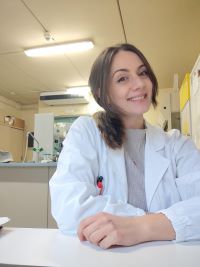
“My PhD journey is an intense voyage of discovery and innovation, where each day brings a new challenge that draws me closer to the core of research”
Contact: tania.petraglia@unibas.it
Mushroom processing by-products represent a significant source of biologically active molecules and enzymes that are currently underutilized. Recovering these compounds can add value to these wastes, offering economic benefits to companies while reducing environmental impact. The primary objective of my research project is the recovery of bioactive molecules, particularly glucans and phenolic compounds, as well as industrial enzymes such as proteases, laccases, and peroxidases from cultivation substrates. These enzymes, which are influenced by species, environmental conditions, cultivation methods, and substrate composition, will be studied through sampling of spent substrates from Pleurotus eryngii and Pleurotus ostreatus. Enzymatic activities will be quantified using spectrophotometric assays, and proteolytic activities will be characterized through zymographic analyses. Additionally, adsorption and immobilization tests of single enzymes and/or specially prepared mixtures will be conducted using natural resins. The total phenolic content will be determined spectrophotometrically, and their characterization will be carried out through chromatography (HPLC-DAD). The total polysaccharide content will also be quantified spectrophotometrically, while glucan content will be measured using a commercial kit. Characterization of these molecules will be conducted through mass spectrometry and NMR analysis.
How my position is funded
My research project entitled “Valorization of by-products deriving from the processing of mushroom as a source of bioactive compounds and enzymes of industrial interest” is funded by a research grant D.M.118/2023 PNRR-Ricerca. The project aligns with the "Mission 2: Green Revolution and Ecological Transition" of the PNRR and it is consistent with the M2C1 component "Sustainable Agriculture and Circular Economy." It aims to develop a circular economy model based on the efficient and sustainable management of waste, with the aim of reducing production and disposal costs.
My motivations
I chose to pursue a PhD in Science to further deepen the knowledge and skills acquired during my university years. The PhD represents for me a fundamental opportunity to grow as a researcher, it will allow me to contribute to research and innovation by developing new ideas and addressing complex challenges. My expectations after graduation include the possibility of working in an academic environment or in an advanced research sector, where I can apply the skills I have acquired to solve real-world problems and contribute to scientific and technological progress. Additionally, I hope to collaborate with experts, continuing to grow both professionally and personally, and perhaps one day be able to passing on my knowledge to new generations of students and researchers.
A day in a PhD student’s life
My typical day as a PhD student starts early in the morning, when I dedicate time to reading scientific articles to stay updated on the latest developments in my research field. After that, I head to the laboratory, where I spend most of the day conducting experiments, collecting data, and analyzing it. Often, throughout the day, I participate in meetings with my supervisor to discuss progress, critically and thoroughly analyze the data obtained, and plan the next steps. I strive to balance experimental work with moments of reflection, during which I develop new hypotheses and research strategies. The day usually ends with reviewing the results obtained and planning the activities for the next day. There are also frequent interactions colleagues, which enrich my journey with new perspectives and ideas.
My publications
Latronico, T.; Petraglia, T.; Sileo, C.; Bilancia, D.; Rossano, R.; Liuzzi, G.M. Inhibition of MMP-2 and MMP-9 by Dietary Antioxidants in THP-1 Macrophages and Sera from Patients with Breast Cancer. Molecules. 2024; 29,1718. doi: 10.3390/molecules29081718.
In this study, we compared the effects of four polyphenolic compounds on ROS production and on the levels of matrix metalloproteinases (MMP)-2 and -9, which are significant pathogenic factors in breast cancer. THP-1 differentiated macrophages were activated by LPS and simultaneously treated with various doses of a green tea extract (GTE), resveratrol (RSV), curcumin (CRC), and an olive fruit extract (Oliplus). All tested compounds showed antioxidant activity in vitro and GTE, RSV, and CRC were able to counteract ROS production induced by H2O2 in THP-1 cells. Additionally, as evaluated by a zymographic analysis, the antioxidant compounds used in this study inhibited both the activity and expression of MMP-2 and MMP-9 through different mechanisms related to their structures and their ability to scavenge ROS. The results suggest that the antioxidants used could be promising agents for the prevention and complementary treatment of breast cancer and other diseases where MMPs play a critical role.